Key Takeaways
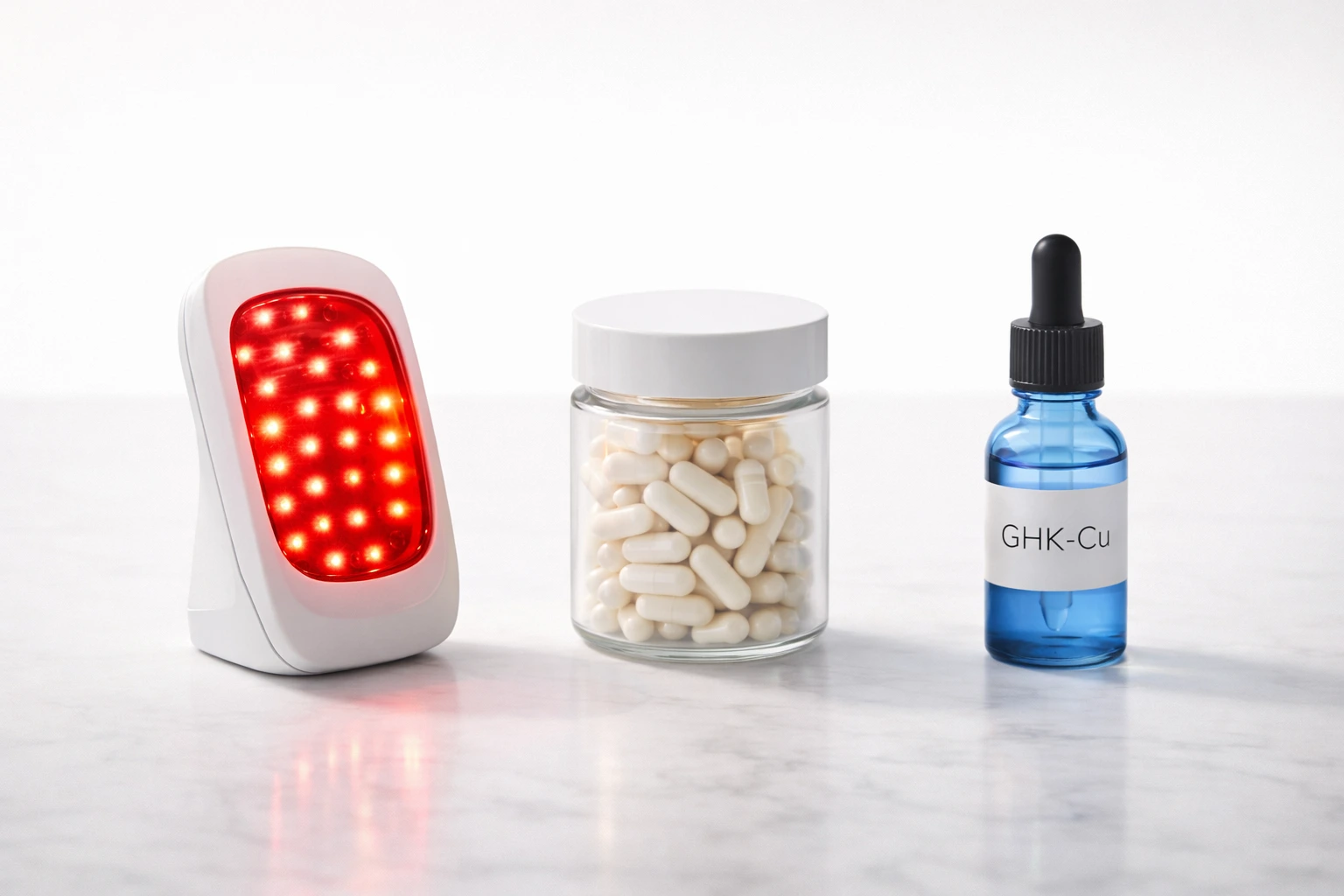
- Three pathways for collagen support: stimulation (light/microcurrent), substrate (oral collagen peptides), and signaling (topical peptides like GHK-Cu), each works through a distinct mechanism
- What the strongest evidence supports: 660 nm red LED increases procollagen by 31% and decreases MMP-1 by 18% in laboratory tissue (Barolet 2009); split-face RCT shows up to 36% wrinkle reduction (Lee 2007)
- Oral collagen peptides have mixed evidence: a 2025 meta-analysis of 23 RCTs found significant pooled effects on hydration, elasticity, and wrinkles, but with funding bias: high-quality non-pharma studies showed no significant effect
- Optimal protocol: layer modalities thoughtfully, consistent red LED therapy 3-5x/week, hydrolyzed collagen peptides if you choose to supplement, topical actives (GHK-Cu, retinol) added one at a time
- Timeline: cellular activation in weeks 1-4, visible improvements in weeks 5-12, maintenance with reduced frequency thereafter
Understanding Collagen: Why It Matters Beyond Vanity
Collagen is the most abundant protein in your body, at roughly 30% of total protein content. It's the structural protein that holds your entire body together, found in skin (70% of dermis), bones (90% of organic matrix), tendons (85% of dry weight), cartilage (70%), blood vessels, and intestinal lining.
The collagen decline problem: Your body's collagen production peaks at age 25-30, then declines by approximately 1% per year. By age 45, you've lost 20% of collagen production. By age 55+, you're down to 50-60% of peak levels.
This decline causes:
- Fine lines appear (age 35+)
- Visible wrinkles develop (age 45+)
- Skin sags noticeably
- Joint flexibility decreases
- Bone density loss accelerates
- Slower skin recovery
- Increased digestive issues (gut barrier breakdown)
The acceleration effect: Not only does production decline, but collagen breakdown increases with age due to higher levels of matrix metalloproteinases (MMPs), enzymes that degrade collagen. You have a double negative: less production + more breakdown = accelerated aging.
The Three Pathways to Collagen Production
Collagen production can be supported through three biochemical pathways. Each works through a distinct mechanism. Understanding the strength of evidence behind each helps you make informed decisions.
Pathway 1: Stimulation (Light-Based, Strong Evidence)
How it works: Red light photons (630-670 nm) are absorbed by mitochondria in fibroblast cells, stimulating the enzyme cytochrome c oxidase and increasing ATP production. With more cellular energy, fibroblasts synthesize more collagen[1].
Clinical evidence: Barolet et al. 2009 showed 660 nm LED increased procollagen by 31% and decreased MMP-1 by 18% in lab-grown human skin, with clinical correlation: 87% of subjects showed reduced wrinkle severity scores after 12 sessions[2]. Lee et al. 2007 split-face RCT documented up to 36% wrinkle reduction and 19% elasticity improvement[3].
Pathway 2: Building Blocks (Oral Collagen Peptides, Mixed Evidence)
How it works: Hydrolyzed collagen peptides are broken down to amino acids during digestion. The hypothesis is that these amino acids (rich in glycine, proline, hydroxyproline) become available to fibroblasts as substrate for collagen synthesis.
What the evidence actually shows: A 2025 systematic review and meta-analysis of 23 RCTs (1,474 participants) found pooled significant effects on skin hydration, elasticity, and wrinkles[6]. Important caveat from the same review: in subgroup analysis, studies not funded by industry showed no significant effect, and high-quality studies showed no significant effect across all categories. The authors conclude that current clinical evidence does not robustly support oral collagen for skin aging once industry funding is controlled for.
Pathway 3: Signaling (Topical Peptides, Emerging Evidence)
How it works: GHK-Cu (glycyl-histidyl-lysyl copper) is a tripeptide that binds to fibroblast receptors and acts as a cofactor for several collagen-stabilizing enzymes including lysyl oxidase. In vitro and small clinical studies show effects on collagen, elastin, and inflammatory signaling, though larger trials are limited.
The honest take on combining modalities
These pathways work on different mechanisms, so combining them is mechanistically reasonable. The strength of evidence varies: Pathway 1 (LED phototherapy) has the strongest controlled-trial support[5]; Pathway 2 (oral peptides) shows mixed results once funding source is controlled for; Pathway 3 (topical peptides) is supported by mechanism studies and emerging clinical data.
What this means for you: consistent LED therapy is the highest-evidence single intervention. Add other modalities as a personal choice; don't over-promise specific multipliers.
Three pathways to support collagen
- 1Stimulation: red lightStrongest evidence. Fibroblasts build more collagen with more cellular energy.
- 2Building blocks: oral peptidesMixed evidence. Significant pooled, weaker once funding bias is controlled.
- 3Signaling: topical peptidesEmerging evidence. GHK-Cu shows mechanism and small-trial promise.
Red Light Therapy for Collagen Activation (The Stimulation Pathway)
Red and near-infrared light (630-850nm wavelengths) penetrate the dermis layer where fibroblasts live. The photobiomodulation process:
- Photon absorption: Red light hits mitochondria in fibroblast cells
- Cytochrome oxidase activation: Photons excite enzyme in mitochondrial complex IV
- Electron transport: Transfer accelerates, increasing proton gradient
- ATP synthesis: More ATP produced, which is the proposed mechanism behind the measured skin changes
- Collagen synthesis: Energy-rich ATP powers collagen gene expression and protein synthesis
- Result: Procollagen increases 31-36%
Clinical Studies
Study 1: Lee et al. (2007)
- Design: 630nm and 830nm red/infrared for 8 weeks
- Results: 36% increase in collagen/elastic fibers, 36% wrinkle reduction, 19% elasticity improvement
- Zero adverse effects
Study 2: Wen-Hwa Li et al. (2021)
- Design: Human dermal fibroblasts + skin explants, 640nm + 830nm daily (10 min)
- Results: Significant COL1A1, COL3A1 gene expression increase, increased procollagen type I synthesis, increased ATP production, increased collagen crosslinks
Optimal Protocol
| Parameter | Optimal Value | Notes |
|---|---|---|
| Wavelength | 630-670nm (red) 760-850nm (near-infrared) | Ideally use both |
| Intensity | 20-100 mW/cm² | Effective therapeutic range |
| Distance | 6-12 inches | From skin surface |
| Frequency | 3-5x per week | Consistent schedule key |
| Duration | 10-20 min/session | Longer doesn't mean better |
| Timeline | 8-12 weeks | For visible collagen accumulation |
| Best Time | Evening | Allows cellular repair during sleep |
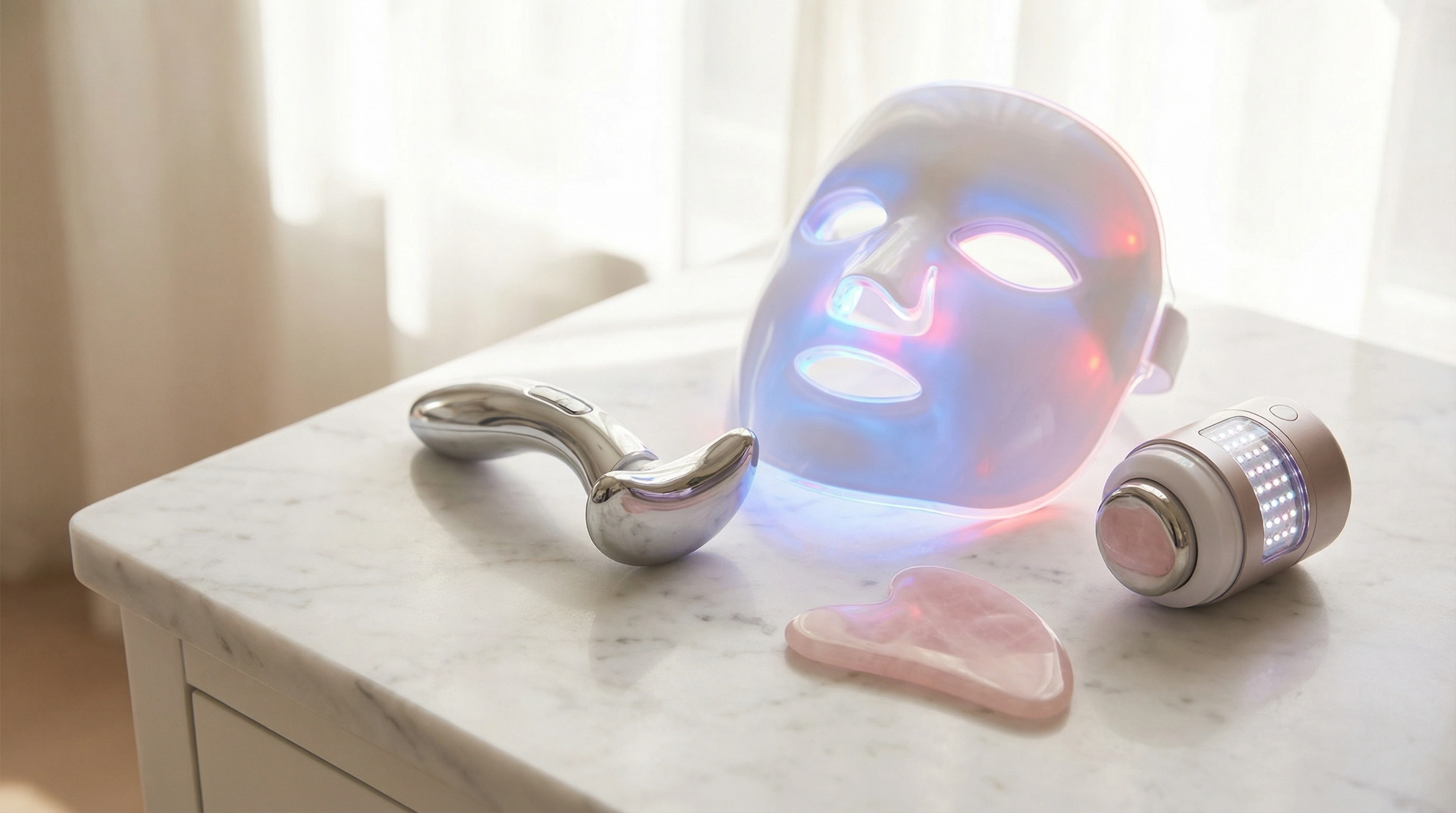
The Viminto 3-in-1 Face Massager features red LED therapy combined with heat and vibration, ideal for daily 10-15 minute collagen stimulation sessions.
Collagen Peptide Supplements (The Building Block Pathway)
Collagen peptides (hydrolyzed collagen, collagen hydrolysate) are collagen protein broken down into smaller amino acid chains through hydrolysis.
Why Hydrolysis Matters
| Type | Molecular Size | Absorption | Bioavailability |
|---|---|---|---|
| Regular Collagen | ~300,000 Da | Too large to absorb | 0% (not absorbable) |
| Hydrolyzed Collagen | 2,000-5,000 Da | Easily absorbed | 90%+ utilized by body |
Clinical Evidence
| Study/Outcome | Result | Timeline | Dosage |
|---|---|---|---|
| 2025 Comprehensive Review (57 RCTs) | |||
| Overall Success Rate | 82% of trials showed ≥1 significant positive outcome | - | Various |
| Wrinkle Reduction | 35% decrease | 12 weeks | 10g marine collagen |
| Skin Hydration & Elasticity | Significant improvement (44% of studies) | 4-12 weeks | 2.5-10 g/day |
| Dermis Density | Increased thickness | 16 weeks | 5g + vitamin C/HA |
| Joint Pain & Function | Reduced pain, improved function (29% of studies) | 8-12 weeks | 10-20g/day |
| Dose-Response | Skin: 2.5-5g | Joints/Muscle: 10-20g | - | Daily |
| Adverse Effects | Zero across all studies | - | - |
Types of Collagen Supplements
| Type | Source | Bioavailability | Best For |
|---|---|---|---|
| Marine Type I & III | Fish scales | 90%+ | Skin (best choice) |
| Bovine Type I & II | Cow skin | 85-90% | Skin + Joints |
| Type II | Chicken cartilage | 85%+ | Joints (specific) |
Optimal Protocol
- Daily dose: 10-15 grams (split morning/evening)
- Type: Hydrolyzed marine collagen peptides (best bioavailability)
- Combination supplements: Vitamin C 500-1000mg, Copper 1-2mg, Hyaluronic acid 50-200mg
- Timing: Morning on empty stomach with vitamin C source (citrus, berries)
- Timeline: Weeks 1-4 cellular uptake, weeks 5-8 skin hydration improvement, weeks 9-12 visible wrinkle reduction
Enhancement: Combine with red light therapy (pathways 1+2) for 40-50% acceleration of results.
Copper Peptides and Signal Molecules (The Signaling Pathway)
GHK-Cu (glycyl-histidyl-lysyl copper complex) is a naturally occurring tripeptide that your body produces, but in declining amounts with age.
Plasma levels of GHK:
- Age 20: ~200 ng/mL
- Age 60: ~80 ng/mL
- Decline: 60% reduction between ages 20-60
How GHK-Cu Activates Collagen
Mechanism 1: Receptor Signaling
GHK-Cu binds to fibroblast cell surface receptors → triggers intracellular signaling cascades → upregulates collagen synthesis genes → fibroblasts produce more collagen actively
Mechanism 2: Enzymatic Cofactor
GHK-Cu serves as cofactor for:
- Lysyl oxidase → Cross-links collagen (increases strength)
- Superoxide dismutase → Neutralizes free radical damage to collagen
- Prolyl hydroxylase → Stabilizes collagen structure
Mechanism 3: Anti-Inflammatory
GHK-Cu reduces inflammatory molecules (TNF-α, IL-6) → lower inflammation = fibroblasts work more efficiently → enhanced collagen synthesis capacity
Clinical Evidence
University of Washington (2020):
- GHK-Cu supports skin remodeling and renewal
- Antioxidant and anti-inflammatory effects (in vitro + in vivo)
- Increases bFGF and VEGF expression (blood vessel formation)
- Enhances collagen and elastin production
- Suppresses TNF-α and IL-6 via NF-κB p65 and p38 MAPK pathways
- Zero adverse effects
How to Use
Topical application (most researched):
- GHK-Cu serums: 1-2% concentration
- Application: 1-2x daily to face
- Timeline: 4-8 weeks for visible improvement
- Best with: LED therapy (synergistic)
Oral supplementation:
- Dosage: 1-2mg copper from GHK-Cu complex daily
- Combined with: Collagen peptides + vitamin C
- Timeline: 8-12 weeks for skin improvement
Critical note: Copper excess is harmful. Total copper intake should not exceed 10mg daily from all sources.
The Synergistic Power: Combining All Three Approaches
What we can honestly say about combining modalities
The three pathways have different mechanisms and different strengths of evidence. The clinical literature does not support a precise “multiplier” figure for combining them, but layering complementary modalities is a reasonable strategy as long as each is evaluated on its own evidence:
- Red light therapy: strongest controlled-trial evidence (procollagen +31%, MMP-1 -18% in HRS lab model; up to 36% wrinkle reduction in split-face RCT)[2][3]
- Oral collagen peptides: mixed; significant pooled effects in 2025 meta-analysis of 23 RCTs, but the funding-source bias caveat is important[6]
- Topical GHK-Cu: mechanistic plausibility, smaller body of clinical data
Realistic timeline: visible improvements typically appear in 4-12 weeks of consistent LED therapy. Adding oral or topical modalities may complement results but will not produce dramatic new outcomes on top.
Complete Collagen Activation Protocol
| Phase | Action Steps | Expected Results |
|---|---|---|
| Week 1-2 Foundation | • Start collagen peptides (10g daily) + vitamin C • Begin topical GHK-Cu serum (1-2x daily) • Let body adjust, establish baseline | Internal preparation No visible changes yet |
| Week 3-4 Add Light Therapy | • Introduce red light therapy (3-5x/week, 15 min) • Continue all supplementation • Maintain consistency | Initial skin texture changes Subtle improvements |
| Week 5-8 Optimization | • Maintain light therapy frequency (3-5x/week) • Continue all supplements consistently • Monitor progress | Visible collagen deposition Skin feels firmer |
| Week 9-12 Acceleration | • Maintain consistent protocol • Don't skip sessions • Full system activated | Dramatic improvement Wrinkles reduced Firmness & elasticity increase |
| Month 4+ Maintenance | • Light therapy: 2-3x/week • Supplements: continue if you find them helpful • Reduce frequency, maintain results | Results stabilize Maintenance protocol preserves benefits |
Sources & References
All claims in this article are supported by peer-reviewed research, clinical studies, and reputable sources. Click any reference to view the original source.
- 1Avci P, Gupta A, Sadasivam M, et al. (2013)Low-level laser (light) therapy (LLLT) in skin: stimulating, healing, restoringSeminars in Cutaneous Medicine and SurgeryAvci P, Gupta A, Sadasivam M, et al. Low-level laser (light) therapy (LLLT) in skin: stimulating, healing, restoring. Semin Cutan Med Surg. 2013;32(1):41-52.JOURNALView Source
- 2Barolet D, Roberge CJ, Auger FA, Boucher A, Germain L (2009)Regulation of skin collagen metabolism in vitro using a pulsed 660 nm LED light source: clinical correlation with a single-blinded studyJournal of Investigative DermatologyBarolet D, Roberge CJ, Auger FA, Boucher A, Germain L. Regulation of skin collagen metabolism in vitro using a pulsed 660 nm LED light source: clinical correlation with a single-blinded study. J Invest Dermatol. 2009;129(12):2751-2759.CLINICAL TRIALView Source
- 3Lee SY, Park KH, Choi JW, et al. (2007)A prospective, randomized, placebo-controlled, double-blinded, and split-face clinical study on LED phototherapy for skin rejuvenationJournal of Photochemistry and Photobiology B: BiologyLee SY, Park KH, Choi JW, et al. A prospective, randomized, placebo-controlled, double-blinded, and split-face clinical study on LED phototherapy for skin rejuvenation. J Photochem Photobiol B. 2007;88(1):51-67.CLINICAL TRIALView Source
- 5Ablon G (2018)Phototherapy with Light Emitting Diodes: Treating a Broad Range of Medical and Aesthetic Conditions in DermatologyJournal of Clinical and Aesthetic DermatologyAblon G. Phototherapy with Light Emitting Diodes: Treating a Broad Range of Medical and Aesthetic Conditions in Dermatology. J Clin Aesthet Dermatol. 2018;11(2):21-27.JOURNALView Source
- 6Authors per journal record (2025)Effects of Collagen Supplements on Skin Aging: A Systematic Review and Meta-Analysis of Randomized Controlled TrialsAmerican Journal of MedicineEffects of Collagen Supplements on Skin Aging: A Systematic Review and Meta-Analysis of Randomized Controlled Trials. Am J Med. 2025.JOURNALView Source
Disclaimer: This information is for educational purposes only and is not medical advice. VIMINTO® devices are designed for wellness and cosmetic use. Results may vary. Consult a healthcare professional for medical concerns.