Key Takeaways
- In 2026, a single in-office LED or red light facial runs $75 to $280 per session in the US (spa add-on $25 to $60, standalone spa $75 to $130, boutique medspa $130 to $200, dermatology office $180 to $280); this guide uses a representative $150, the middle of that range, for the 5-year math
- At a representative $150 per session, weekly in-office visits cost about $7,800 a year and roughly $39,000 over five years; a twice-monthly cadence runs about $19,500, and even monthly maintenance reaches about $9,000
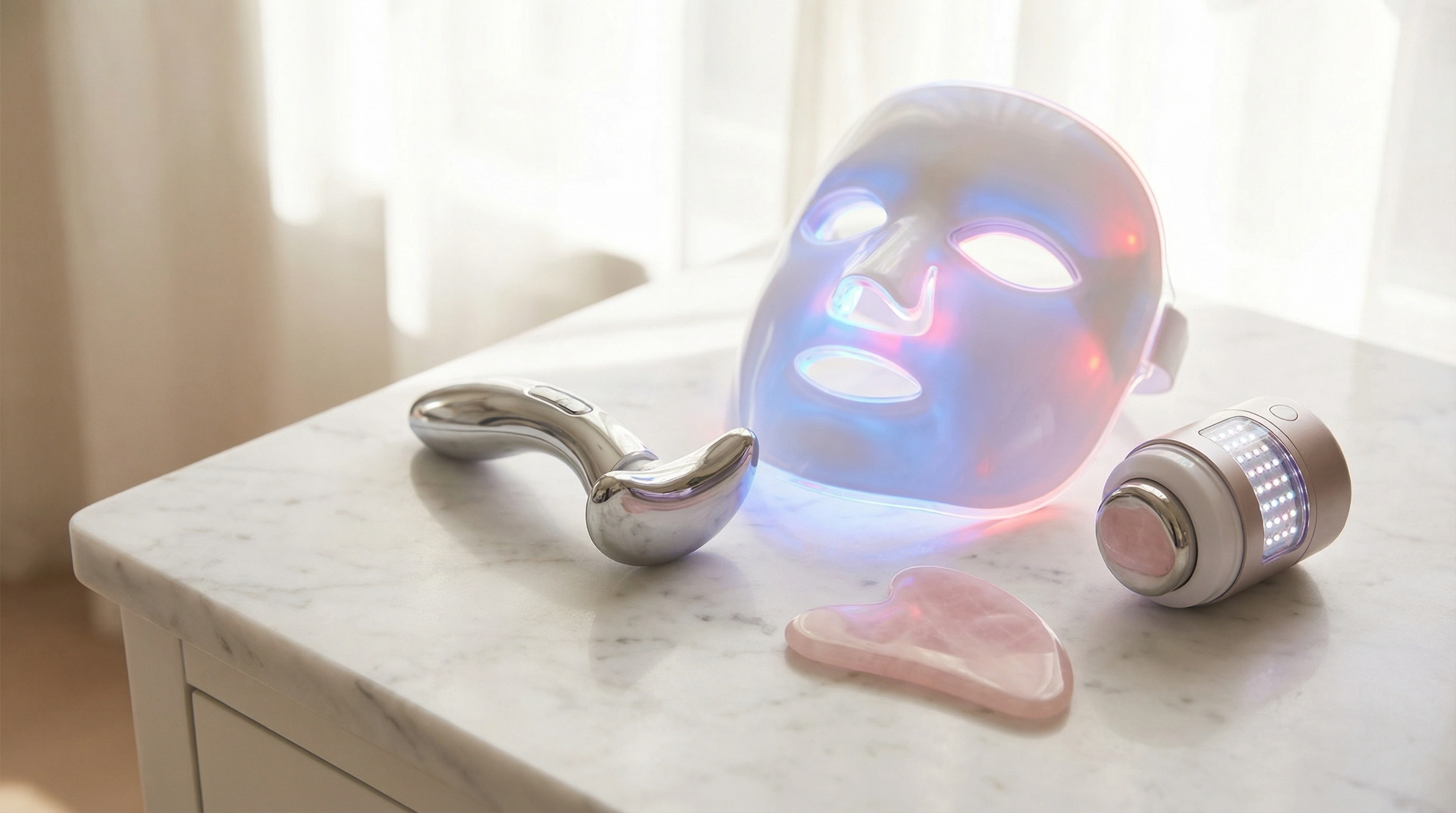
- At-home red light devices are a one-time purchase: budget multi-mode tools (red LED plus gentle heat and vibration) run about $30 to $60, while premium LED face masks cost $200 to $600
- Breakeven equals device price divided by the cost of one in-office session. Using a conservative $60 per session, a budget device pays for itself in about 1 session and a premium mask in roughly 6 to 10; at a $150 session it is more than twice as fast
- After breakeven, every at-home session is effectively free, while in-office providers typically recommend ongoing upkeep every 2 to 4 weeks, making the clinic route a subscription rather than a one-time cost
- In-office panels deliver more light output per session; at-home devices use the same red wavelengths (around 630 to 660 nanometers), with near-infrared in many panels and masks up to about 850 nanometers, at lower output and make up for it through daily consistency
How much does in-office red light therapy cost in 2026?
A single in-office LED or red light facial runs $75 to $280 per session in 2026, depending on the setting: a spa add-on runs $25 to $60, a standalone spa session $75 to $130, a boutique medspa $130 to $200, and a dermatology office $180 to $280. This guide uses a representative $150, the conservative middle of that range, for the five-year math.
The per-visit price is only half the story. Providers generally suggest an initial series of 8 to 12 sessions over 8 to 12 weeks, then ongoing upkeep every 2 to 4 weeks, because the glow fades without maintenance. Packages soften the blow a little: a 6-session bundle costs $400 to $1,500, and memberships average $59 to $129 a month.
That recurring cadence is the key point for any honest cost comparison. In-office red light is a subscription, not a one-time purchase. For a plain-English primer on the method itself, see what red light therapy actually does.
What does at-home red light therapy cost?
At-home red light devices are a one-time purchase that spans a wide range. Budget multi-mode tools that combine red LED light, gentle warmth, and vibration typically run about $30 to $60. Premium LED face masks generally cost $200 to $600. After that single purchase, every session at home carries no per-visit fee.
The budget end is where the math gets interesting. The Viminto 3-in-1 Face Massager sits here, pairing red LED light with gentle heat and vibration in one handheld device for short daily sessions at home (see current price on the product page). Premium masks cover the whole face at once and cost more, but both formats are a single outlay rather than a recurring bill.
Ongoing costs are minimal: a USB-C charge every few weeks, and for some masks an occasional battery or eye-shield swap after a few years. Browse the full range of red light therapy devices, or start with what red light therapy actually does.
What is the 5-year cost of in-office vs at-home red light therapy?
Over five years, in-office sessions dwarf a one-time device. At a representative $150 per session, weekly visits total about $7,800 a year and roughly $39,000 over five years. A twice-monthly cadence runs about $19,500, and monthly maintenance still reaches about $9,000. A one-time at-home device costs between roughly $40 and $600, once.
| Approach | Assumed price | Per year | 5-year total |
|---|---|---|---|
| In-office, weekly (52/yr) | ~$150/session | $7,800 | ~$39,000 |
| In-office, every 2 weeks (26/yr) | ~$150/session | $3,900 | ~$19,500 |
| In-office, monthly (12/yr) | ~$150/session | $1,800 | ~$9,000 |
| In-office membership | ~$99/mo (range $59 to $129) | $1,188 | ~$5,940 |
| At-home budget device (red LED plus heat and vibration) | One-time, typically under one in-office session (see product page) | $0 ongoing | ~$40 to $60 once |
| At-home premium LED mask | One-time $200 to $600 | $0 ongoing | $200 to $600 once |
| Breakeven vs at-home | A budget device pays for itself in about 1 in-office session. A premium mask pays for itself in roughly 6 to 10 sessions (using a conservative $60/session; faster at higher session prices). | ||
Calculate your own 5-year cost
Drag the sliders to match your situation.
Estimate only. In-office prices and frequency vary; see the sources below.
Even the cheapest in-office path, a mid-tier monthly membership, lands near $5,940 over five years. That is still far above the price of any single device. These figures use a conservative representative session price; at the dermatology-office end of the range ($180 to $280), the gap only widens.

How many at-home sessions does it take to break even?
Breakeven is simple division: the device price divided by the price of one in-office session. Using a conservative $60 per session, a $40 to $60 budget device pays for itself in about one visit, a $120 mid-range device in about two, and a $300 to $600 premium mask in roughly five to ten. At a representative $150 session, every device breaks even more than twice as fast.
The formula is reproducible with your own numbers: breakeven sessions = device price / per-session cost. Here is the function across common device prices.
The breakeven formula, step by step
- 1Your device price$40 to $600, paid once
- 2Divide by one clinic session$75 to $280 each
- 3That is your breakevenoften just 1 to a few visits
| Device price | Breakeven at $60/session | Breakeven at $150/session |
|---|---|---|
| $40 (budget) | ~1 session | under 1 session |
| $60 (budget) | 1 session | under 1 session |
| $120 (mid-range) | 2 sessions | ~1 session |
| $300 (premium mask) | 5 sessions | 2 sessions |
| $600 (premium mask) | 10 sessions | 4 sessions |
After breakeven, every home session is effectively free, and a quality device keeps working for years (Viminto devices carry a 1-year warranty). That is the structural advantage of owning over renting: the at-home cost curve goes flat while the in-office curve keeps climbing every few weeks.
Does at-home red light therapy work as well as in-office?
The biggest honest difference is intensity, not the underlying light. Professional in-clinic panels deliver more light output per session, so they can do more in less time. At-home devices use the same red wavelengths (around 630 to 660 nanometers), with near-infrared in many panels and masks up to about 850 nanometers, at lower output, and make up for it through frequency: short daily sessions at home versus occasional clinic visits.
In controlled studies, red and near-infrared LED light has been associated with improvements in the appearance of fine lines, skin firmness, and radiance.[1][2][3] These studies examined LED light in general, not any specific consumer device, and the effect builds with consistent use rather than a single visit. That is exactly where a device you own has an edge: it is always within reach, which makes the routine easier to keep.
Dig deeper into the underlying science in our science of anti-aging guide and our collagen production guide, see how light pairs with other modalities in microcurrent and LED synergy, or read about LED light for blemish-prone skin.
Sources & References
All claims in this article are supported by peer-reviewed research, clinical studies, and reputable sources. Click any reference to view the original source.
- 1Barolet D, et al. (2009)Regulation of skin collagen metabolism in vitro using a pulsed 660 nm LED light sourceJournal of Investigative DermatologyBarolet D, Roberge CJ, Auger FA, Boucher A, Germain L. Regulation of skin collagen metabolism in vitro using a pulsed 660 nm LED light source: clinical correlation with a single-blinded study. J Invest Dermatol. 2009;129(12):2751-2759.CLINICAL TRIALView Source
- 2Lee SY, et al. (2007)A prospective, randomized, placebo-controlled, double-blinded, and split-face clinical study on LED phototherapy for skin rejuvenationJournal of Photochemistry and Photobiology BLee SY, Park KH, Choi JW, et al. A prospective, randomized, placebo-controlled, double-blinded, and split-face clinical study on LED phototherapy for skin rejuvenation. J Photochem Photobiol B. 2007;88(1):51-67.CLINICAL TRIALView Source
- 3Avci P, et al. (2013)Low-level laser (light) therapy in skinSeminars in Cutaneous Medicine and SurgeryAvci P, Gupta A, Sadasivam M, et al. Low-level laser (light) therapy (LLLT) in skin: stimulating, healing, restoring. Semin Cutan Med Surg. 2013;32(1):41-52.JOURNALView Source
- 4Wunsch A, Matuschka K (2014)A controlled trial to determine the efficacy of red and near-infrared light treatment in patient satisfaction, reduction of fine lines, wrinkles, skin roughness, and intradermal collagen density increasePhotomedicine and Laser SurgeryWunsch A, Matuschka K. A controlled trial to determine the efficacy of red and near-infrared light treatment in patient satisfaction, reduction of fine lines, wrinkles, skin roughness, and intradermal collagen density increase. Photomedicine and Laser Surgery. 2014;32(2):93-100.CLINICAL TRIALView Source
- 5Cleveland ClinicRed Light TherapyCleveland ClinicCleveland Clinic. Red Light Therapy. Cleveland Clinic.OTHERView Source
Disclaimer: This information is for educational purposes only and is not medical advice. VIMINTO® devices are designed for wellness and cosmetic use. Results may vary. Consult a healthcare professional for medical concerns.

So which is the smarter spend?
For most people, an at-home device is the smarter long-term spend. It pays for itself within a handful of sessions and then costs nothing per use, while in-office visits keep billing every few weeks. In-office still wins when you want the strongest single-session output or hands-on guidance. The two are not mutually exclusive.
A quick decision guide:
- You want the lowest five-year cost and a daily habit: a budget at-home device like the Viminto 3-in-1 Face Massager pays for itself almost immediately (see current price on the product page).
- You want full-face coverage in one go and have a bigger budget: a premium LED mask still beats years of clinic visits on total cost.
- You want the strongest single-session output or professional guidance: book occasional in-office sessions, and consider owning a device for upkeep between visits.
Many people start at home and book the occasional clinic session, getting the cost efficiency of ownership with the option of professional intensity when they want it. Compare the full range of red light therapy devices, or pair one with another device through Viminto bundles for a better combined price.