Key Takeaways
- Three unrelated mechanisms: LED = light absorbed by cells (strongest at-home evidence), microcurrent = gentle electrical muscle stimulation (moderate evidence, gel-dependent), gua sha = manual stone massage (tradition + massage logic, thinnest trial file)
- For beginners, LED is the one you cannot do wrong: no technique, no gel, five passive minutes with auto-shutoff
- Gua sha at $5–$40 is the cheapest test of whether you will keep any facial routine, and the only one with a same-day (temporary) de-puffing effect
- They combine cleanly: gua sha mornings, LED daily, microcurrent 3–5 evenings a week; add one modality at a time
- All three deliver modest, cumulative change over weeks rather than days; anything promising dramatic results in days is marketing
What is the difference between microcurrent, gua sha, and LED?
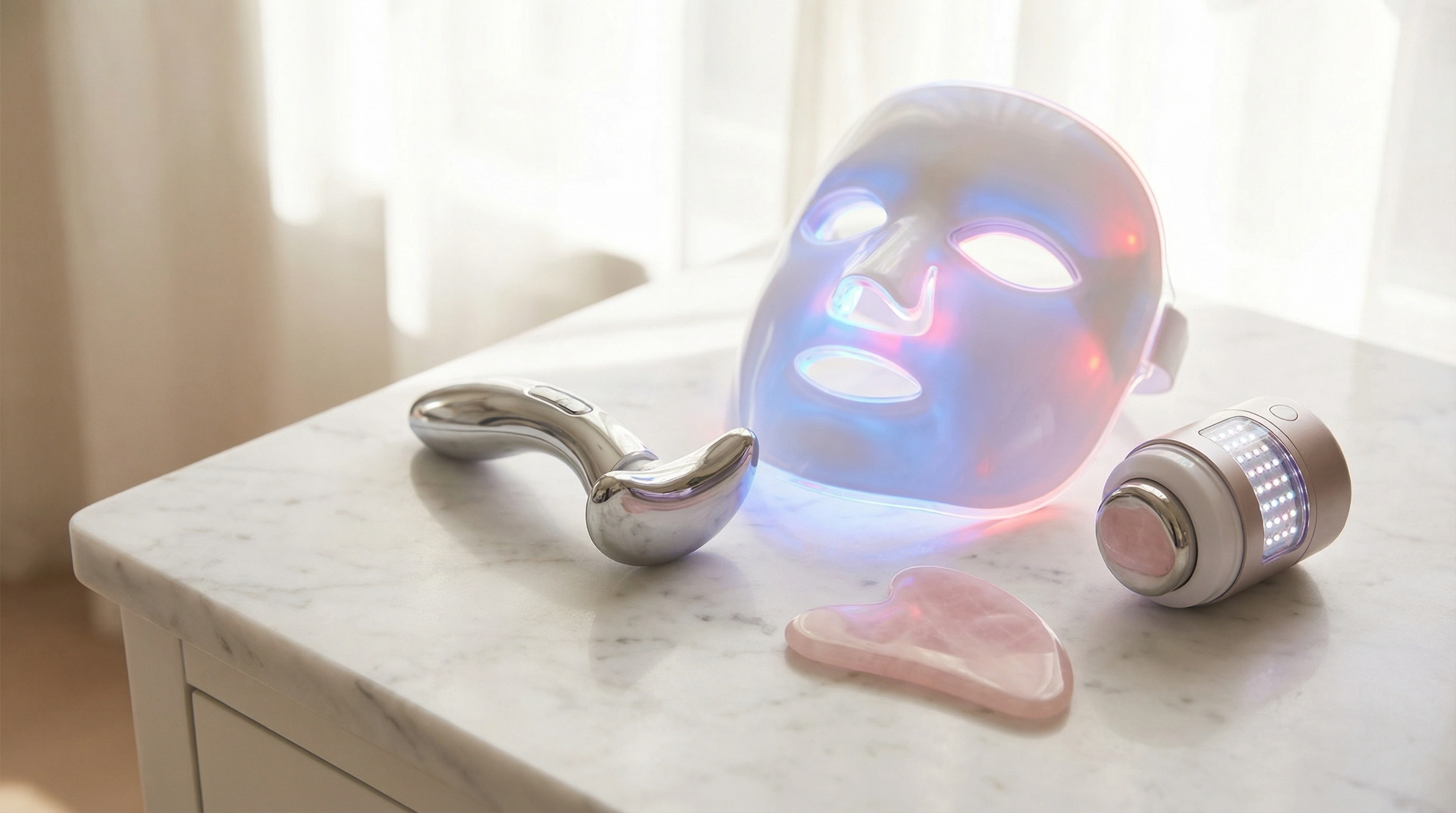
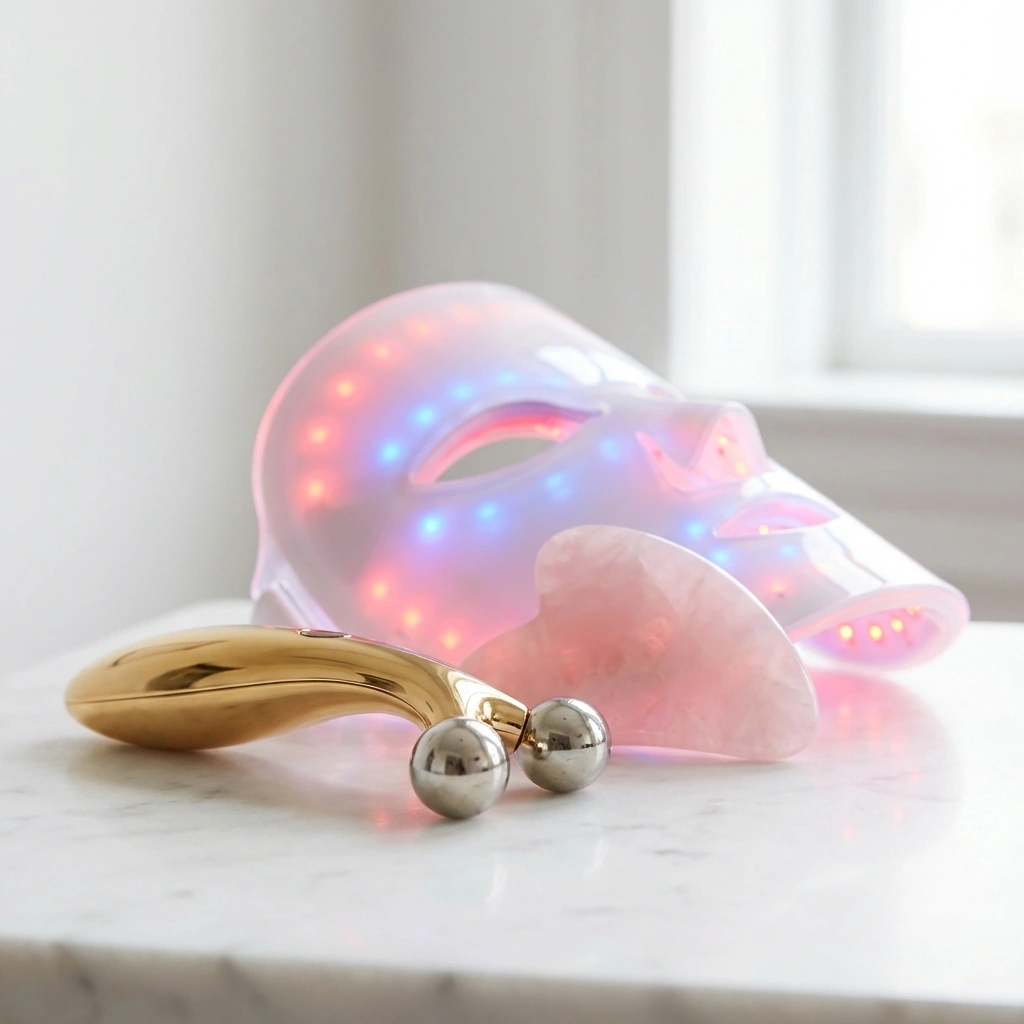
They are three unrelated mechanisms aimed at the same goal. LED bathes skin in specific light wavelengths that cells absorb; microcurrent runs a gentle electrical current through facial muscles; gua sha is manual: a smooth stone drawn along the face and neck. Different effort levels, different evidence files, different budgets.
| Factor | LED Light | Microcurrent | Gua Sha |
|---|---|---|---|
| How it works | Specific light wavelengths (630–660 nm red) absorbed by cells | Gentle electrical current stimulates facial muscles | Manual stone scraping along face and neck lines |
| Effort level | Passive: glide or wear, zero technique | Active: needs conductive gel + pathing | Most active: technique decides everything |
| At-home evidence | Strongest: controlled trials on texture & fine lines | Moderate: small trials, professional-device roots | Thinnest: traditional practice + massage logic, few trials |
| Session | 5–10 min daily | 5–10 min, 3–5×/week | 2–5 min daily or as-needed |
| Feels like | Warm light, mild vibration (device-dependent) | Faint tingling under gel | A firm facial massage |
| Typical cost | $40–$300 | $100–$400 (+ gel refills) | $5–$40 |
| Best for | Consistency, texture, overall glow | Toned, “lifted” look | De-puffing, tension, ritual |
The single most useful way to choose: be honest about how much effort you will sustain. LED asks nothing but showing up; gua sha asks for technique every single session; microcurrent sits between, with a gel step you cannot skip. The best-evidenced device you abandon loses to the modest one you use daily.
What does the evidence actually say for each?
LED has the strongest at-home file: a 2014 controlled trial (Wunsch & Matuschka) measured higher collagen density, smoother texture, and reduced fine lines after 30 red-light sessions[1]. Microcurrent’s file is moderate: small trials and decades of professional salon use[2]. Facial gua sha’s file is the thinnest: centuries of traditional practice and sound massage logic[3], but very few controlled trials.
- LED (630–660 nm red): the best-studied of the three for home use, with the realistic arc being gradual change over 5–12 weeks. Full walkthrough in our red light guide.
- Microcurrent: the at-home devices are descendants of professional units used in salons since the 1980s. Published results are real but modest, and 100% dependent on conductive gel. Dry skin conducts nothing. The pairing logic with light is covered in our microcurrent + LED deep dive.
- Gua sha: what it demonstrably does is what any skilled facial massage does: temporarily improves the look of puffiness by moving fluid, and feels genuinely good. Regard firming claims as tradition plus plausibility, not trial-proven.
None of the three is hype-free in how it gets marketed. All three reward the same thing: weeks of consistency, judged in honest lighting.
Ranking the three by evidence is not the same as ranking them by worth. LED holds the deepest research file for skin quality, microcurrent has a lighter file plus a long professional track record for a toned look, and facial gua sha rests mostly on tradition and sound massage logic rather than controlled trials. All three are gentle, all three reward consistency, and the best one is whichever you will genuinely keep doing. A modest habit you repeat beats the best-evidenced device gathering dust in a drawer.
Which device should a beginner choose?
LED, in most cases, because it is the one a beginner cannot do wrong. There is no technique to learn, no gel to forget, no pressure to calibrate: clean skin, five minutes, auto-shutoff. Gua sha is the cheapest way to find out whether you will actually keep a facial routine; microcurrent is best adopted second, once a routine already exists.
A combination device flattens the learning curve further: the Viminto 3-in-1 Face Massager pairs 630 nm red LED with gentle warmth and vibration massage in one pass: effectively the passive benefits of light plus a light version of the massage benefits gua sha users chase, without the technique homework. It activates on skin contact and shuts itself off at five minutes.
The honest budget note: a $10 gua sha stone you love using beats a $300 device gathering drawer dust. Start where your consistency is most likely to survive.
Can you combine microcurrent, gua sha, and LED?
Yes, they do not interfere with each other, and layering them across the week is common. The practical pattern: gua sha in the morning for de-puffing, LED daily as the consistency anchor, microcurrent 3–5 evenings a week with its gel step.
Two sequencing rules keep it simple:
- Light before gel. On evenings you run both, do the LED session on clean skin first, then apply conductive gel for microcurrent. Light penetrates clean skin best.
- One new thing at a time. Add the second modality only after the first is automatic: the same start-small rule as the rest of a daily wellness routine.
How do you use each one safely?
All three are gentle when used as directed; each has exactly one rule that matters most. LED: keep eyes closed near the light. Microcurrent: never skip the conductive gel, and avoid it entirely if you have an implanted electrical device. Gua sha: featherlight pressure, always with a slip product: the stone should glide, never drag.
- Sensitive or breakout-prone skin: start every modality at its gentlest (shortest sessions, lightest pressure) and add frequency before intensity. Skip massage tools over any irritated or broken area until it settles.
- Photosensitivity: if you take medication that increases light sensitivity, clear LED with your doctor first.
- The universal misconception: more sessions do not mean faster results. Overuse earns irritation, not acceleration. Follow your device manual’s session guidance.
Standard disclaimer applies: this is wellness guidance for cosmetic appearance, not medical advice. For any persistent skin concern, see a professional.
Which is right for you?
Decide by goal and honesty about effort: want the strongest-evidenced passive habit → LED. Want a toned, lifted look and will keep a gel routine → microcurrent. Want a $10 morning de-puff ritual → gua sha. Want one device covering the most ground → a combination tool.
- Busy and consistency-challenged: LED. Five passive minutes is the easiest habit in skincare to keep.
- Routine-lover with ten minutes to enjoy: gua sha mornings + LED evenings, the cheapest complete setup on this page.
- Already consistent, chasing the lifted look: add microcurrent. It rewards exactly the people who never miss a session.
If you start anywhere, start with the five-minute habit: the 3-in-1 Face Massager ships free with a 1-year warranty and 60-day returns, long enough to judge it across the full 4–8 week arc the evidence describes.
Sources & References
All claims in this article are supported by peer-reviewed research, clinical studies, and reputable sources. Click any reference to view the original source.
- 1Wunsch A, Matuschka K (2014)A controlled trial to determine the efficacy of red and near-infrared light treatment in patient satisfaction, reduction of fine lines, wrinkles, skin roughness, and intradermal collagen density increasePhotomedicine and Laser SurgeryWunsch A, Matuschka K. A controlled trial to determine the efficacy of red and near-infrared light treatment in patient satisfaction, reduction of fine lines, wrinkles, skin roughness, and intradermal collagen density increase. Photomedicine and Laser Surgery. 2014;32(2):93-100.CLINICAL TRIALView Source
- 2Bu P, Duan R, Luo J, et al. (2024)Development of home beauty devices for facial rejuvenation: establishment of efficacy evaluation systemClinical Cosmetic and Investigational DermatologyBu P, Duan R, Luo J, et al. Development of home beauty devices for facial rejuvenation: establishment of efficacy evaluation system. Clinical Cosmetic and Investigational Dermatology. 2024;17:571-583.JOURNALView Source
- 3Cleveland ClinicGua Sha: What It Is and How To Do ItCleveland Clinic Health EssentialsCleveland Clinic. Gua Sha: What It Is and How To Do It. Cleveland Clinic Health Essentials.OTHERView Source
Disclaimer: This information is for educational purposes only and is not medical advice. VIMINTO® devices are designed for wellness and cosmetic use. Results may vary. Consult a healthcare professional for medical concerns.