Key Takeaways
- Blue light (415nm) targets acne bacteria through a photochemical reaction: bacteria produce coproporphyrin III pigment that absorbs light and generates free radicals; humans don't produce this pigment, so treatment is bacteria-specific
- Red light (630nm) calms visible redness and supports collagen production, which may help improve the appearance of post-acne marks, while blue light may help minimize future breakouts; the mixed blue plus red arm showed the strongest lesion reduction in the foundational randomized trial
- Clinical evidence: randomized and home-device trials recorded significant lesion reductions over 4 to 12 weeks, with adverse events described as mild and transient
- Safe and well-tolerated: No UV radiation; bacteria cannot develop resistance to light (unlike antibiotics); excellent for antibiotic-resistant acne cases
- Results appear in 2-4 weeks with daily 10-30 minute sessions; maintenance 3-5x/week long-term; consistency matters more than intensity
How LED Therapy Works: The Bacterial Mechanism
Blue Light Kills P. Acnes Bacteria
The bacteria responsible for acne, Cutibacterium acnes (C. acnes, previously P. acnes), produces a pigment called coproporphyrin III (CPIII) inside its cells.
When blue light (particularly 415-422nm wavelengths) hits this pigment, it triggers a photochemical reaction:
- Blue light photons penetrate C. acnes cells
- CPIII absorbs the photon energy and becomes \"excited\"
- Excited CPIII generates reactive oxygen species (ROS), free radicals
- Free radicals destroy bacterial cell membranes and DNA
- C. acnes bacteria die
Critically, humans don't produce CPIII naturally. This means blue light kills acne bacteria without harming your own skin cells: it is bacteria-specific.
Why Red Light Enhances Results
While blue light targets bacteria, red light (630-670nm) works on visible redness and skin recovery:
- Penetrates deeper into dermis (blue light stays more superficial)
- Stimulates mitochondrial energy (ATP) production in skin cells
- Increases collagen and elastin synthesis via fibroblast activation
- Modulates cytokine production, reducing pro-inflammatory markers (IL-1β, TNF-α)
- Promotes angiogenesis, the formation of new blood vessels that supports natural skin recovery
Clinical result: Red light reduces redness, swelling, and the appearance of acne scarring while supporting collagen production while blue light may help minimize future breakouts.
Why Blue and Red Are Combined
In the foundational randomized trial, the mixed blue plus red light arm produced the strongest lesion reduction of the four arms tested[1], and a later home-device study of the same 415 plus 633 nm combination reported significant reductions over 4 and 8 weeks[2]. For broader skincare benefits, learn about combining LED with other anti-aging technologies.
- Blue light415-422 nmStudied for skinexcites bacterial pigment and kills C. acnes
- Red light630-670 nmStudied for skincalms visible redness and supports skin recovery
Clinical Evidence: What Research Actually Shows
Foundational RCT: Papageorgiou et al. (2000)
A randomized controlled trial of 107 patients with mild-to-moderate acne vulgaris compared blue light (peak at 415 nm), mixed blue + red light (415 + 660 nm), cool white light, and benzoyl peroxide. Both phototherapy arms produced significant lesion reductions, with mixed blue+red showing the strongest effect[1].
Combined Blue + Red LED for Acne: Goldberg & Russell (2006)
An open-label study of combination blue (415 nm) + red (633 nm) LED phototherapy delivered via a portable home-use device for mild-to-severe acne vulgaris[2]. Mean inflammatory and non-inflammatory lesion counts decreased significantly over 4 and 8 weeks of treatment, with mild and transient adverse events. The authors concluded the device is safe and effective for adolescents and adults at home.
Mechanism Confirmed: Comprehensive Reviews
Modern dermatology reviews of LED phototherapy confirm the wavelength-specific mechanisms behind blue and red light, with blue light generating reactive oxygen species inside C. acnes via porphyrin photochemistry, and red light reducing inflammation through documented photobiomodulation pathways[3]. A 2021 systematic review of blue light for acne also confirms efficacy across multiple study designs[4].
LED Therapy vs. Traditional Acne Treatments
| Factor | LED Light Therapy | Topical Antibiotics | Benzoyl Peroxide | Isotretinoin |
|---|---|---|---|---|
| Mechanism | Targets C. acnes + calms visible redness | Kills bacteria | Kills bacteria + dries skin | Shrinks sebaceous glands |
| Effectiveness | Significant lesion reduction over 4-12 weeks[1][2] | 40-50% reduction | 30-40% reduction | 90%+ (severe side effects) |
| Bacterial Resistance | Zero | Yes (common) | Rare but possible | N/A |
| Side Effects | Mild, transient redness or warmth | Irritation, allergic reactions | Severe dryness, irritation | Birth defects, severe dryness, depression |
| Safety for Sensitive Skin | Excellent | Poor | Poor | Not suitable |
| Pregnancy Safety | Limited data: ask your doctor | Varies | Limited data | Highly teratogenic (banned) |
| Cost | $200-400 device (one-time) | $20-50/month | $10-30/month | $200-300/month |
Key advantage: LED works by photochemical damage rather than a biochemical pathway, so the resistance route bacteria take with antibiotics does not apply, which matters as antibiotic-resistant acne becomes more common.
For an affordable at-home option, the Viminto 3-in-1 Face Massager combines blue LED light therapy with heat and vibration for comprehensive acne care. Learn more about choosing the right LED device for your skin type.
How to Use LED Therapy: Daily Protocol
For Mild-to-Moderate Acne (At-Home Device)
Step 1: Cleanse thoroughly
- Wash face with gentle, non-stripping cleanser
- Pat dry completely (water can reduce light penetration)
- Remove any makeup or skincare products
Step 2: Position LED device
- Hold device 1-3 inches from face (per manufacturer instructions)
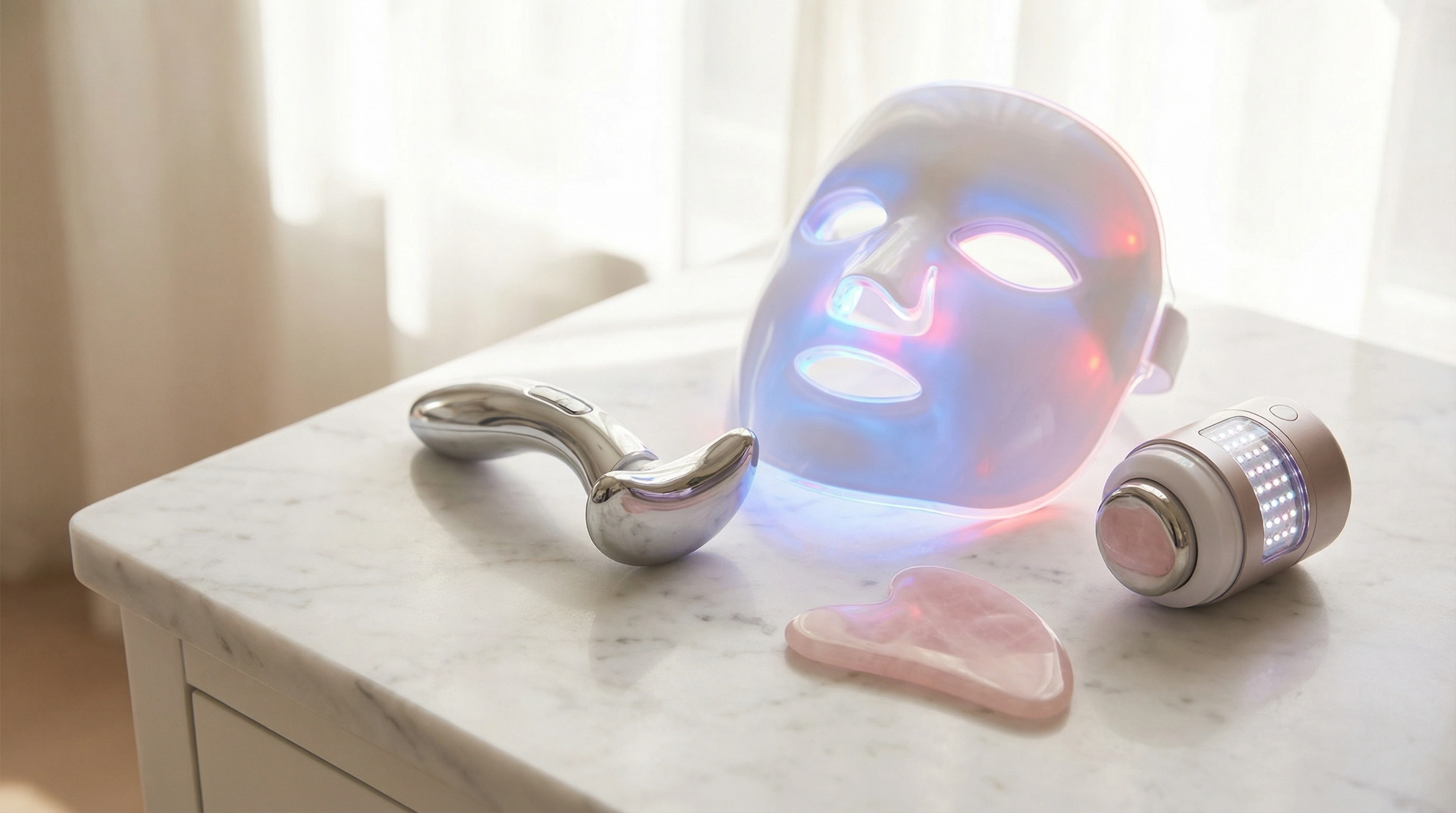
- Most devices: dome-shaped or mask-style covering entire face
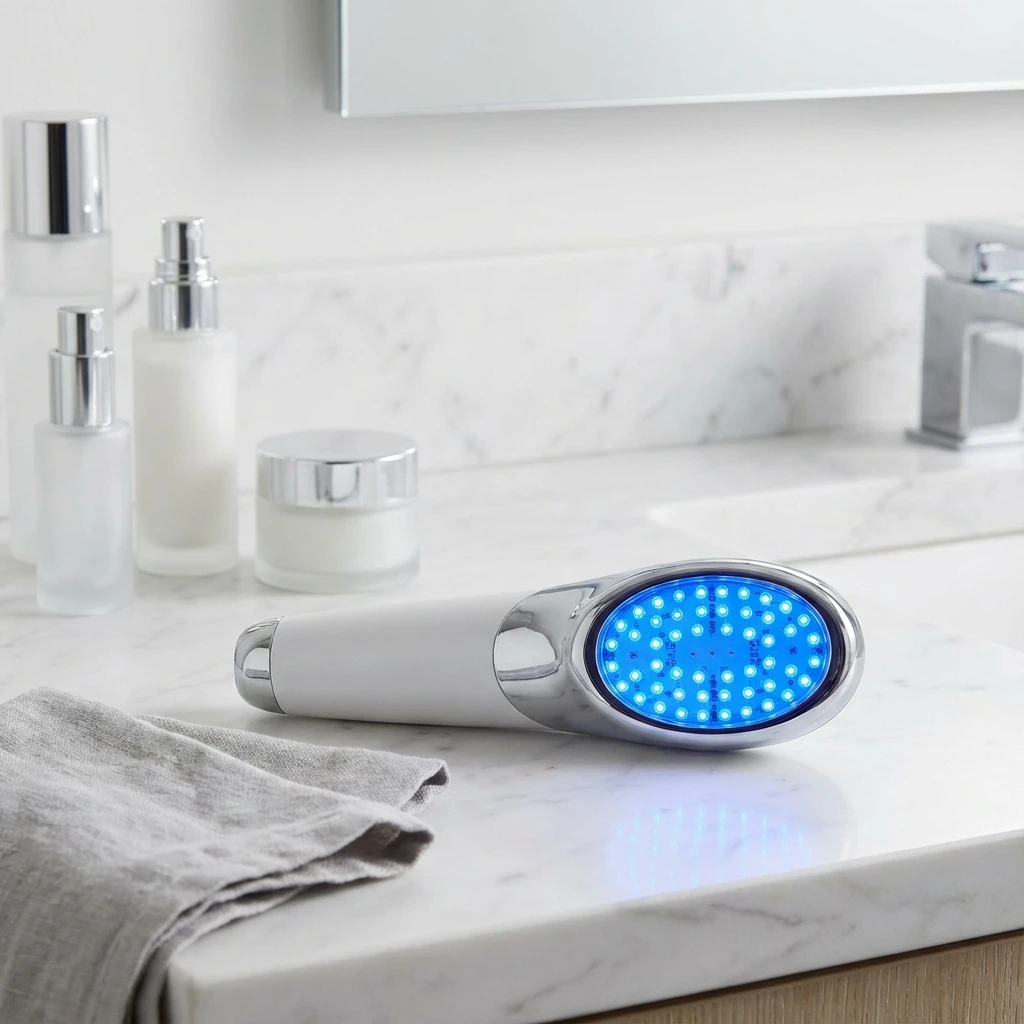
- For targeted treatment, handheld LED devices offer precision control
Step 3: Activate light therapy
- Duration: 10-30 minutes (varies by device)
- Frequency: Daily for first 4 weeks; then 3-5x weekly for maintenance
- Sensation: Warmth and gentle glow; no pain or discomfort
Step 4: Post-treatment care
- Optional: Apply gentle moisturizer
- Use sunscreen SPF 30+ next morning (learn more about complete skincare routines)
Treatment Timeline
| Week | Expected Results | Skin Status |
|---|---|---|
| Week 1 | Slight reduction in inflammation | Redness may improve |
| Week 2-3 | Noticeable decrease in active lesions | Fewer new pimples forming |
| Week 4 | Significant lesion reductions reported across RCTs[1][2] | Visual improvement typical |
| Week 8-12 | Sustained improvement, fewer new breakouts | Clearer appearance |
| Ongoing | Maintenance 3-5x/week helps minimize recurrence | Long-term acne control |
Important: Consistency matters. Daily use for the first 4 weeks shows best results.
Recommended Device: The Viminto 3-in-1 Face Massager features blue LED mode for acne support, combined with red and green LED options for skin care.
Sources & References
All claims in this article are supported by peer-reviewed research, clinical studies, and reputable sources. Click any reference to view the original source.
- 1Papageorgiou P, Katsambas A, Chu A (2000)Phototherapy with blue (415 nm) and red (660 nm) light in the treatment of acne vulgarisBritish Journal of DermatologyPapageorgiou P, Katsambas A, Chu A. Phototherapy with blue (415 nm) and red (660 nm) light in the treatment of acne vulgaris. Br J Dermatol. 2000;142(5):973-978.CLINICAL TRIALView Source
- 2Goldberg DJ, Russell BA (2006)Combination blue (415 nm) and red (633 nm) LED phototherapy in the treatment of mild to severe acne vulgarisJournal of Cosmetic and Laser TherapyGoldberg DJ, Russell BA. Combination blue (415 nm) and red (633 nm) LED phototherapy in the treatment of mild to severe acne vulgaris. J Cosmet Laser Ther. 2006;8(2):71-75.CLINICAL TRIALView Source
- 3Ablon G (2018)Phototherapy with Light Emitting Diodes: Treating a Broad Range of Medical and Aesthetic Conditions in DermatologyJournal of Clinical and Aesthetic DermatologyAblon G. Phototherapy with Light Emitting Diodes: Treating a Broad Range of Medical and Aesthetic Conditions in Dermatology. J Clin Aesthet Dermatol. 2018;11(2):21-27.JOURNALView Source
- 4Effect of Blue Light on Acne Vulgaris: A Systematic ReviewSensorsEffect of Blue Light on Acne Vulgaris: A Systematic Review. Sensors (Basel). 2021.JOURNALView Source
- 5Avci P, Gupta A, Sadasivam M, et al. (2013)Low-level laser (light) therapy (LLLT) in skin: stimulating, healing, restoringSeminars in Cutaneous Medicine and SurgeryAvci P, Gupta A, Sadasivam M, et al. Low-level laser (light) therapy (LLLT) in skin: stimulating, healing, restoring. Semin Cutan Med Surg. 2013;32(1):41-52.JOURNALView Source
Disclaimer: This information is for educational purposes only and is not medical advice. VIMINTO® devices are designed for wellness and cosmetic use. Results may vary. Consult a healthcare professional for medical concerns.
Safety & Side Effects: What Research Confirms
Blue Light Safety Profile
NIH findings: Blue light LED therapy has an excellent safety record.
Why it's safe:
- No UV radiation (UV causes damage; visible light does not)
- No thermal heating (blue LED generates minimal heat)
- Targeted mechanism (kills bacteria without harming human cells)
- Long history of use (studied since early 2000s with zero serious adverse events)
Documented Side Effects (Rare, Minor)
- Mild redness: Temporary, resolves within hours
- Warmth sensation: Normal and indicates light penetration
- Dryness: Rare; use moisturizer if occurs
Who Should Avoid LED Therapy
- Pregnant women: Limited safety data; consult OB-GYN
- Light-sensitive conditions: Photosensitive epilepsy (rare but possible risk)
- Certain medications: Photosensitizing drugs (tetracyclines): ask a dermatologist first
- Active herpes simplex: Blue light may trigger flare-ups
- Eye conditions: Never look directly into blue light source
Overall: LED is a gentle, low-risk option in the acne toolkit, with no UV involved.
How long before you notice a difference? Light-based routines work on a schedule measured in weeks, not days. Most published protocols ran sessions several times a week for four to twelve weeks before reviewers recorded meaningful change in blemish counts, and the results held only while people kept using the device. That makes consistency the single biggest predictor of whether an at-home LED habit is worth it. A mask or handheld you use most days for two months will out-perform a professional-grade panel you try twice and abandon.
Set expectations like a realist. LED is best understood as a gentle, low-risk way to support clearer-looking skin and an easy layer to add to an existing routine, not a substitute for professional care when blemishes are severe, painful, or scarring. When the picture is more than the occasional breakout, a skin professional who can examine you in person beats any device, and any article on the internet, every time.